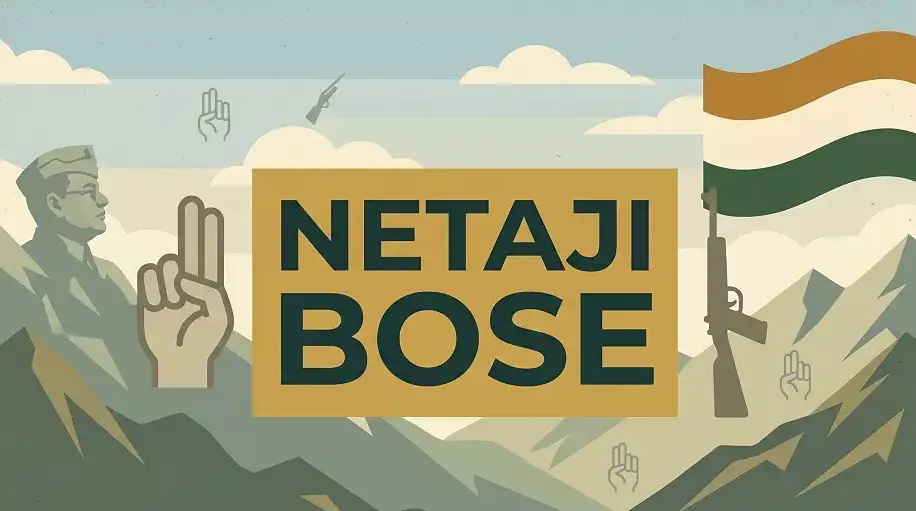
Dive into the captivating story of Netaji Subhas Chandra Bose, one of the most dynamic leaders of India's independence movement. Known for his radical approach and charismatic leadership, Bose's vision for India's freedom through absolute defiance set him apart from his contemporaries.
Early Life and Political Awakening
Born on January 23, 1897, in Cuttack, Odisha, Bose was a brilliant student deeply influenced by the teachings of Swami Vivekananda. His nationalist fervor led him from Presidency College, Kolkata, to Cambridge University, ultimately shaping his destiny as a revolutionary leader.
Ascendancy in Indian Politics
After returning to India, Bose joined the Indian National Congress, rising through the ranks with his profound dedication. However, his belief in aggressive resistance often contrasted with Gandhi's nonviolent approach, leading to significant ideological shifts within the movement.
Formation of the Indian National Army
Determined to secure independence through armed struggle, Bose led the Indian National Army (INA) during World War II. Composed of Indian prisoners of war and expatriates, the INA became a symbol of militant resistance against the British Raj from outside India's borders.
Legacy of Defiance and Freedom
The iconic war cry "Give me blood, and I will give you freedom!" and the salutation "Jai Hind" continue to inspire generations. Despite the complexities of the era, his strategic vision and patriotic zeal drew widespread admiration across the subcontinent.
The End and the Mystery
Bose's reported death in 1945 remains one of history's most enduring mysteries. His disappearance left behind a legacy of intrigue and deep veneration, cementing his status as a legendary figure in India's long march toward sovereignty.
Conclusion
Netaji Subhas Chandra Bose remains a towering and influential leader. His uncompromising commitment to freedom, tactical acumen, and ability to inspire hope in the face of overwhelming odds have made him an eternal national hero.