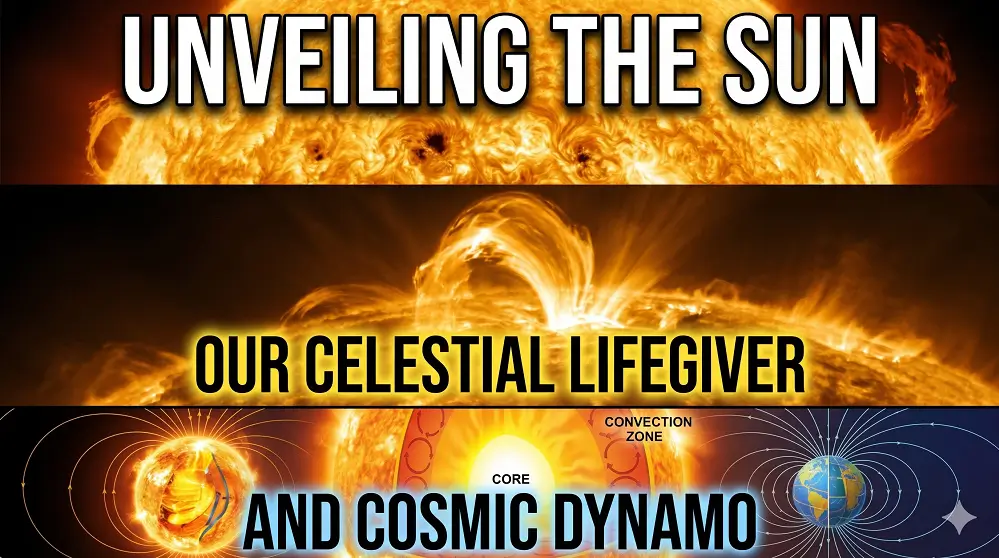
Join us on an illuminating journey to the heart of our solar system as we unravel the mysteries of the Sun, the celestial furnace that bathes our world in light and warmth. From its scorching surface to its enigmatic core, the Sun is a source of endless fascination.
Anatomy of a Star
The Sun is a yellow dwarf star located at the center of our solar system, approximately 93 million miles from Earth. It is composed primarily of hydrogen and helium. Its immense gravity and the nuclear fusion reactions in its core generate the intense heat and light that radiate into the vacuum of space.
Nuclear Fusion: The Engine of the Sun
Deep within the Sun's core, temperatures reach millions of degrees Celsius. Here, hydrogen atoms fuse to form helium, releasing incredible amounts of energy. This energy travels to the surface over thousands of years before finally being emitted as the sunlight we see on Earth.
Solar Activity and Space Weather
The Sun's surface is marked by sunspots, solar flares, and prominences. These are driven by the Sun's complex magnetic field. Additionally, the Sun emits a stream of charged particles known as the solar wind. When these particles interact with Earth's magnetic field, they create beautiful auroras but can also pose risks to satellites and power grids.
Conclusion
The Sun is more than just a light in the sky; it is a window into the fundamental workings of the universe. By studying our closest star, we deepen our understanding of our place in the cosmos and the delicate balance that sustains life on our planet.