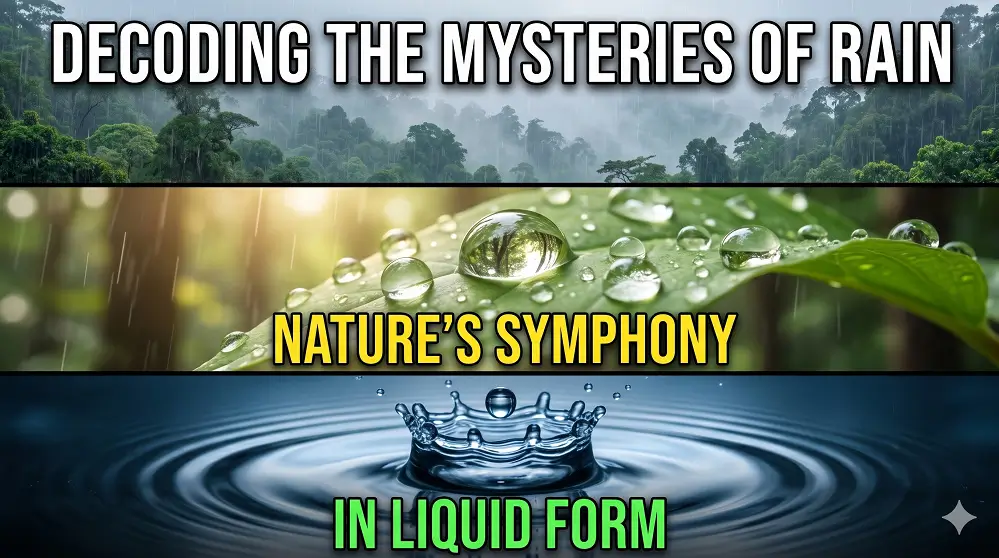
Let's embark on a journey through the ethereal realm of rain—a natural phenomenon that transforms the landscape and replenishes the earth's thirst with its gentle touch. From the billowing clouds above to the parched soil below, the rain process is a symphony of science and wonder.
The Birth of Raindrops: Condensation
The rain process begins high in the atmosphere, where water vapor condenses onto tiny particles called condensation nuclei, forming clouds. As these droplets collide and merge, they grow larger and heavier, eventually falling to the Earth as precipitation.
Impact on Ecosystems
Rain is a lifeline for terrestrial ecosystems, providing moisture for plants, animals, and microorganisms. It replenishes rivers, fills reservoirs, and sustains agricultural crops, ensuring the continued health and vitality of our planet.
Climate Change and Rainfall Patterns
Climate change is altering rainfall patterns worldwide, leading to more frequent storms in some regions and prolonged droughts in others. These shifts have profound implications for water resources and global agriculture, highlighting the need for mitigation strategies.
Conclusion
Rain is more than just weather—it is a vital force that sustains life and nourishes the human spirit. By understanding the science behind rain, we can deepen our appreciation for this wondrous gift of nature.